
Why We Give Girls Menstrual Cups
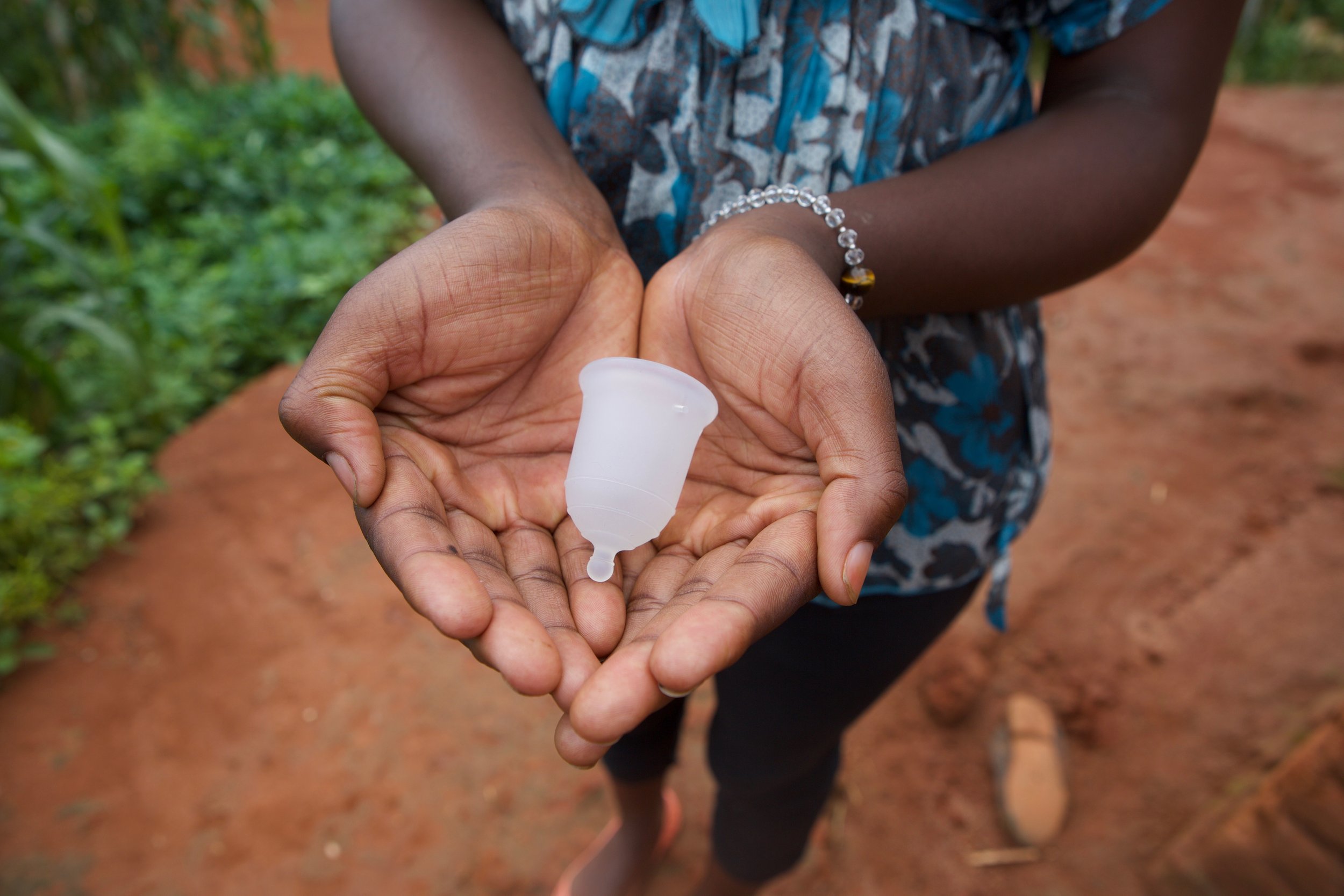
If you've landed here because you googled "how to use a menstrual cup", great. Stick around. If you're here because you care about girls in vulnerable communities, also great. Actually, you're in the right place either way.
We're going to talk about menstrual cups. About why they matter for you personally. And why they matter for girls around the world who currently don't have access to safe, affordable menstrual products. Because here's the thing: the same benefits that make cups brilliant for you are the same ones that literally change the lives of girls living in period poverty.
What Actually Is a Menstrual Cup?
A menstrual cup is a small, flexible cup made from medical-grade silicone or similar materials, shaped a bit like a bell. You fold it, insert it into your vagina, and it collects menstrual fluid instead of absorbing it like a pad or tampon would. Once it's in place and opens (it'll form a seal against your vaginal walls), you won't feel it. And that's genuinely brilliant. You can go about your life normally for up to 12 hours before you need to empty it, clean it, and reinsert it.
It comes in different sizes depending on your body and how heavily you menstruate, so there's something that works for everyone.
The Most Important Question: How Do I Use a Menstrual Cup?
Before Your First Use
Sterilise your cup by boiling it in water for 5 minutes or placing it in boiling water to submerge it completely. This kills any bacteria and makes sure it's clean. Wash your hands thoroughly afterwards. Do this before your first use and then before each cycle begins.
Inserting Your Cup
Take a breath. Seriously, this is step one. When you're nervous or stressed, your body tenses up, which makes insertion harder. Breathe and be calm. Think about how many tampons and pads you're not going to throw away. That helps.
Fold your cup using the push-down fold if you're new to this. It's the simplest. Push one side of the cup into the centre and fold it in half, making it nice and small. Some people wet the cup slightly with water before inserting, which can make it easier and more comfortable.
Get into a comfortable position. Over the toilet is standard. Some people squat like they're challenging an invisible opponent. Others prefer lying on their back with knees bent. Find what works for you.
Insert the folded cup into your vagina, directing it towards your spine. Push it fully inside. Once it's in, the cup should pop open, but it doesn't always happen automatically. Gently turn the cup by the base a few times, then run your index finger around the bottom to check for any folds. When it's properly inserted, you should feel absolutely nothing. Literally forget you're wearing it. That's how you know it's working.
Living Your Life
You now have up to 12 hours before you need to think about it. You can swim, run, exercise, sit in a meeting, go to school, go to work, sleep. Nothing changes. Nothing leaks (in most cases). This is the freedom part.
Removing Your Cup
When it's time, take another deep breath. Your first instinct might be panic ("it's stuck forever"), but it's not. Your cup is hanging out in your vaginal canal, which is 3 to 6 inches for most people. Your cup cannot get lost inside you. It just can't.
Reach for the stem of your cup and wiggle it down gently. You'll feel some resistance, which is good. That's the seal doing its job. If you're struggling to reach it, try urinating first. Your muscles will help move the cup down. Once the base is outside your body, push your index finger into the side of the cup to break the seal. This is what allows you to remove it comfortably.
Empty the contents into the toilet or sink. Some people like to remove their cup in the shower to avoid any mess. Rinse it with clean water and reinsert. Some people report that the amount of blood is shocking at first because you've never actually seen how much you bleed when using pads or tampons. It's usually way less than you think.
You'll need to empty your cup somewhere between 2 and 4 times a day, depending on your flow.
So Why Should I Be Obsessed With Menstrual Cups?
Environmental Impact
One menstrual cup lasts up to 10 years. One cup. That replaces thousands of single-use pads and tampons over your lifetime. To put this in perspective, you might use 15,000 tampons or pads in your lifetime. With a cup, that's 4 or 5 total.
Globally, 45 billion period products are discarded every year. They end up in landfills and oceans. According to research published by the BBC comparing menstrual products across multiple environmental indicators, "the menstrual cup was a clear winner, followed by period underwear, reusable pads and, in last place, single-use pads and tampons." The environmental footprint of a menstrual cup used for one year is about 1.5% that of disposable pads and tampons. And here's what makes it genuinely remarkable: with a menstrual cup, you only have to use it for a month before it breaks even on its carbon footprint compared to single-use products.
Cost Effectiveness
You pay around 30 dollars once. That covers your menstruation for the next decade. The average woman spends roughly 12,800 dollars on period products in her lifetime. With a cup, you spend a fraction of that. Even accounting for occasional replacements, the long-term savings are significant.
Convenience and Freedom
You don't need to carry spare products with you. You don't need to find a bathroom every few hours. You can wear it during exercise, swimming, sleep. Most people report a dramatic decrease in stress about leaks and staining once they've figured out insertion. You get your life back.
Health Benefits
Unlike some disposable pads and tampons, menstrual cups don't contain bleach or other chemicals. They're made from medical-grade silicone, which is inert and safe. A systematic review published in The Lancet Public Health found that menstrual cups are safe and result in similar or lower leakage rates compared to pads or tampons.
Research from the Liverpool School of Tropical Medicine has shown that menstrual cups can offer significant reproductive health benefits. In a study of over 4,000 Kenyan schoolgirls, those using menstrual cups had a 33 percent reduction in HSV-2 (the virus that causes genital herpes) compared to those using traditional products. The study also found that girls using cups had a 24 percent reduction in bacterial vaginosis, with cups helping to maintain a healthy vaginal microbiome dominated by protective Lactobacillus crispatus bacteria.
These findings matter because they show that menstrual cups don't just manage your period. They actively protect your reproductive health.

This Is Where The Cova Project Comes In
In developing communities across Africa, a girl might not have access to a single pad, let alone multiple options. She might miss school for 50 days a year because she has no way to manage her period safely. She might use cloth, newspaper, or nothing at all. These makeshift solutions cause rashes, blisters, and infections. They're often painful and deeply uncomfortable.
In some places, girls resort to exchanging their bodies for money to buy pads. Period poverty isn't just an inconvenience. It's a barrier to school, to health, to dignity, to opportunity.
Menstrual cups solve this in a way other products can't. One cup costs around 7 dollars and lasts 10 years. A girl receives education on how to use it properly. And because cups require only a small amount of water to clean (unlike reusable pads, which need lots of water to wash properly and can be difficult to dry in certain climates), they work in almost any environment. They work in wet seasons. They work in dry seasons. They work in schools without adequate bathroom facilities.
The Lancet research shows this isn't just theory. Girls given menstrual cups had better vaginal health, fewer infections, and maintained better school attendance. They experienced increased confidence and mobility. One cup changed their life for an entire decade.
Why We Chose Cups
The Cova Project provides menstrual cups because they're the most sustainable, cost-effective, dignified solution to period poverty. We're not just managing symptoms. We're removing a barrier to school. We're preventing infections. We're giving girls the same freedom and confidence you experience when you can manage your period without stress.
When you donate a menstrual cup through The Cova Project, you're not buying a product. You're giving a girl 10 years of dignity. You're keeping her in school. You're protecting her health. You're giving her a choice.
Ready to Get Involved?
If you use a menstrual cup and love it, you already understand why they matter. Tell people about it. Break the silence. Normalise the conversation.
If you don't use a cup yet but you're intrigued, try one. See for yourself.
And if you want to help a girl in a vulnerable community access the same freedom and health benefits you have, donate a cup. For just 7 dollars, you can change someone's life for 10 years. That's not an exaggeration. That's a fact backed by research and by the stories of thousands of girls we've worked with.
A girl shouldn't miss school because she menstruates. She shouldn't use unsafe products that damage her health. She shouldn't trade her body for access to basic necessities. This isn't complicated. This is solvable.
You can be part of the solution.